
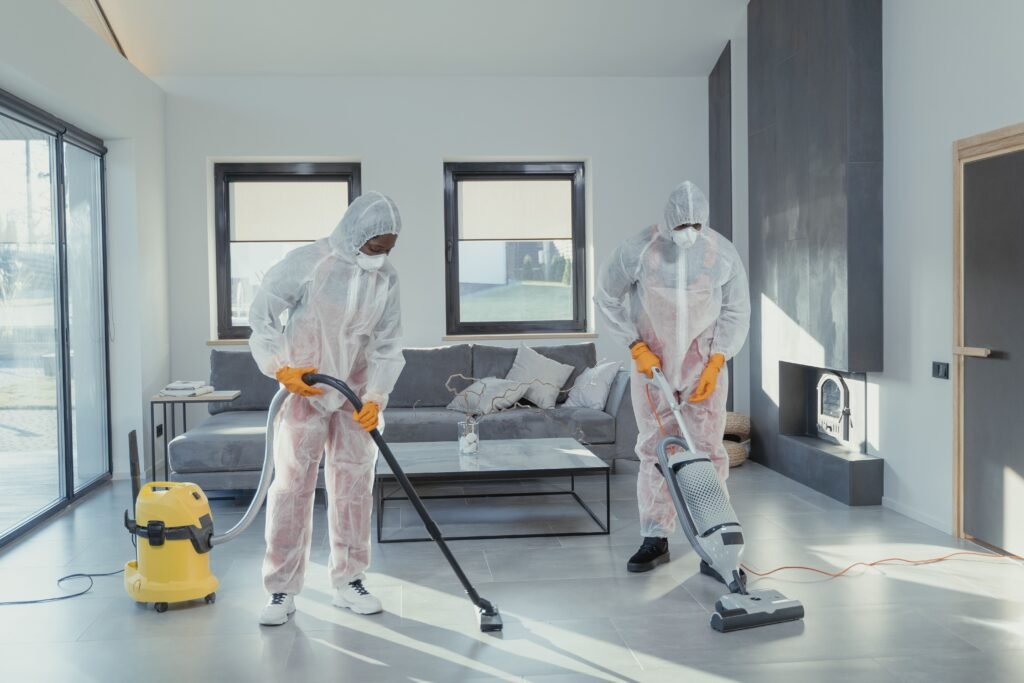
Walking into a home that has just been swept and dusted brings an immediate sense of order. The beds are made, the kitchen countertops are wiped clear of crumbs, and the floors shine with a clean scent. Yet, run a finger along the top edge of a kitchen cabinet, peer closely at the porous grout between bathroom floor tiles, or inspect the interior tracks of a sliding patio window, and a very different reality emerges.
Beneath the clean surface, homes quietly accumulate layers of polymerized cooking oils, bonded mineral scale, atmospheric soot, and millions of microscopic allergens.
Many homeowners struggle to determine where basic custodial housekeeping ends and technical sanitation begins. When booking house cleaning services or dividing domestic chores, the question inevitably arises: what is the actual difference between deep cleaning and regular cleaning? Is “deep cleaning” merely an upsell for scrubbing slightly harder, or does it represent an entirely different operational, mechanical, and chemical methodology?
Understanding the distinction between deep cleaning vs regular cleaning is not simply a matter of semantics. It is a fundamental choice between cosmetic surface maintenance and restorative remediation. In urban environments subject to heavy industrial dust, seasonal weather inversions, and hard groundwater supplies, choosing the wrong cleaning protocol leads directly to premature architectural surface wear, stubborn limescale encrustation, and deteriorating indoor environmental quality.
Table of Contents
- Conceptual Framework: Custodial Maintenance vs. Restorative Remediation
- Deep Cleaning vs. Regular Cleaning: The Operational Breakdown
- Room-by-Room Technical Checklists
- The Science of Cleaning: Chemical pH and Mechanized Equipment
- Environmental Realities: Dust Infiltration and Water Hardness
- When to Choose Regular vs. Deep Cleaning: A Practical Diagnostic Framework
- Pricing and Service Benchmarks
- Frequently Asked Questions (FAQs)
Conceptual Framework: Custodial Maintenance vs. Restorative Remediation
To understand the core difference between deep cleaning and regular cleaning, one must evaluate the depth of substrate penetration, chemical contact dwell times, mechanical energy, and the physical scope of work.
Regular cleaning functions as ongoing custodial maintenance. Its primary mandate is the containment and suppression of daily superficial debris, loose unbonded dust, ambient crumbs, and transient biological shedding such as hair and skin flakes. Performed on a high-frequency cycle—daily, semi-weekly, or weekly—it is strictly confined to visible, unencumbered horizontal surfaces and central floor thoroughfares.
Because routine housekeeping must be executed within short operational windows, it relies on neutral, consumer-grade surfactants, cotton wringer mops, brooms, and manual dry-dusting cloths. While vital for baseline visual tidiness, regular cleaning lacks the mechanical torque and chemical capabilities required to lift cross-linked oily residues, extract deep-seated allergens, or reverse progressive mineral buildup.
| Dimension | Regular Cleaning (Superficial Maintenance) | Deep Cleaning (Restorative Remediation) |
| Target Areas | Eye-level horizontal surfaces | Structural junctions, appliance interiors, substrate pores |
| Soil & Contaminants | Unbonded dust, crumbs, visible clutter | Polymerized lipids, mineral scale, microbial biofilms |
| Methods & Chemistry | Neutral household surfactants & manual tools | Industrial pH-calibrated chemistry & mechanized extraction |
| Service Frequency | High frequency (Daily / Weekly) | Low frequency (Quarterly / Event-driven) |
Deep cleaning, by comparison, is an engineering-driven, restorative decontamination protocol. Its mandate is not merely to tidy, but to strip away months of embedded soil, scale, and particulate accumulation, returning a built environment to a clean microbiological and physical baseline.
Rather than working around objects, technical deep cleaning accesses structural interfaces: behind bulky appliances, deep inside architectural window channels, within microscopic tile grout pores, along high-level cornices, and around bathroom sanitary brackets.
Executed periodically—typically on a quarterly, semi-annual, or event-driven cadence (such as post-renovation or pre-move-in)—deep cleaning replaces generic domestic solutions with industrial, pH-calibrated chemistry, single-disc floor scrubbers, pressurized hot-water injection extractors, and thermal steam systems.
Deep Cleaning vs. Regular Cleaning: The Operational Breakdown
The operational realities of these two workflows diverge across every key vector of facility management. The table below details these differences across labor, chemistry, mechanics, and scope:
| Operational Parameter | Regular Cleaning (Custodial Maintenance) | Deep Cleaning (Technical Remediation) |
| Primary Objective | Suppression of daily surface debris, basic hygienic upkeep, and visual tidiness. | Complete physical and hygienic reset; extraction of cross-linked oils, limescale, and sub-surface allergens. |
| Surface Accessibility | Confined to accessible, eye-level surfaces and primary floor thoroughfares. | Comprehensive: behind heavy appliances, inside built-in fixtures, tile grout lines, and ceiling fixtures. |
| Execution Cadence | Daily, semi-weekly, or weekly. | Quarterly, semi-annually, or event-triggered (move-in, post-renovation, seasonal reset). |
| Operational Duration | 1 to 3 hours for standard residential spaces. | 4 to 8+ hours requiring coordinated multi-stage labor. |
| Mechanization Level | Low: manual microfiber towels, string mops, sweeping brooms, domestic dry vacuums. | High: single-disc rotary scrubbers, industrial wet/dry vacuum extractors, high-pressure steam generators. |
| Chemical Formulations | Diluted, consumer-grade neutral soaps and multi-surface spray disinfectants. | Industrial-grade chemistry: chelated acid descalers, alkaline degreasers, quaternary biocides. |
| Labor Structure | Single individual or lone domestic housekeeper. | Coordinated tactical teams (2 to 5 specialized technicians) managed by an on-site supervisor. |
| Economic Profile | Low marginal cost per visit; ongoing recurring operational expense. | Capital investment per square foot, reflecting professional machinery, chemicals, and labor hours. |
Room-by-Room Technical Checklists

A major pitfall of standard custodial cleaning is that sweeping and dry dusting often move fine particulates into baseboards, tile grout, and mechanical tracks rather than extracting them. A technical deep cleaning protocol enforces a top-down, back-to-front decontamination sequence across every distinct architectural zone.
[Internal Link Opportunity: Professional House Cleaning Services]
Kitchen Environments: Lipid Pyrolysis and Degreasing
Residential kitchens endure severe thermal and organic soil loads. Culinary preparations involving hot vegetable oils, shallow or deep frying, and spice roasting aerosolize micro-droplets of cooking oil. Carried by thermal updrafts, these vaporized lipids settle on kitchen exhaust hoods, cabinet trim, backsplash tiles, and ceiling fans.
Over weeks and months, ambient heat drives oxidative polymerization, turning clear oil droplets into a yellow-brown, tacky poly-lipid resin. This hardened layer binds tightly to surfaces and attracts airborne dust.
| Stage | Phase | Mechanism / Description |
| 1 | Aerosolization | Cooking oil aerosols + thermal updraft |
| 2 | Deposition | Settles on splashbacks, cabinet crowns, and baffles |
| 3 | Chemical Transformation | Oxidative polymerization via ambient heat and oxygen |
| 4 | Substrate Formation | Cross-linked poly-lipid layer (insoluble in water and neutral soaps) |
| 5 | Remediation Requirement | Alkaline saponification (pH 11.0–14.0) + high-heat steam emulsification |
- Regular Cleaning Scope: Wiping granite countertop slabs with a neutral surfactant spray, washing visible sink basins, surface-wiping gas cooktop surfaces, and damp mopping the primary floor walkways.
- Deep Cleaning Protocol:
- Complete removal and chemical soaking of range hood baffle filters in heated alkaline degreasing solutions (such as Diversey Suma Grill D9) to saponify baked fats.
- Application of pressurized dry steam (120°C to 140°C) across tile splashbacks, silicone caulking joints, and cooktop control manifolds to break down cross-linked grease.
- Pulling modular appliances (refrigerators, dishwashers, cooking ranges) out from cabinetry alcoves to clean rear heat-dissipation coils, vacuum motor bays, scour grease-soaked floors, and clean wall interfaces.
- Emptying all modular overhead and floor cabinetry to vacuum internal tracks, sanitize melamine surfaces with food-safe quaternary ammonium solutions, and detail interior wire pull-out baskets.
- Descaling under-sink plumbing junctions, p-traps, and aerators to eliminate organic sludge and grease rings.
Bathrooms: Limescale, Mineral Precipitation, and Biofilms
Bathrooms are subject to regular cycles of high humidity and water evaporation. When unsoftened water evaporates from warm surfaces, it leaves behind dissolved calcium and magnesium ions as rock-hard mineral crusts.
Concurrently, human sebum, fatty acid residues from cosmetic soaps, and shedding skin flakes bind with mineral salts to create insoluble soap scum (calcium and magnesium stearates).
These rough mineral deposits provide microscopic footholds for bacterial biofilms and fungal colonies, such as black mold (Aspergillus niger) and pink bacterial film (Serratia marcescens), which colonize silicone seals and porous grout.
- Regular Cleaning Scope: Spraying vanity mirrors with consumer glass cleaner, scrubbing the interior commode bowl with domestic hydrochloric acid, wiping down faucet necks, and wiping bathroom floors.
- Deep Cleaning Protocol:
- Targeted application of buffered organic acid descalers (such as Taski R9) across tempered glass shower enclosures, glazed wall tiles, and chrome plumbing fixtures to dissolve calcium carbonate without etching the metal finish.
- High-pressure steam decontamination and mechanical wire/nylon brush agitation of tile grout lines to kill and lift fungal hyphae.
- Descaling, disassembly, and soaking of shower rose nozzles, aerators, and mixer spouts to eliminate internal mineral blockages and restore regular flow profiles.
- Intensive sanitization of toilet assemblies: treatment of porcelain bowls with thickened descaling biocides (Taski R6), deep scouring beneath the upper flush rim, and scrubbing concealed floor brackets and cistern internals.
- Pulling up floor drain grates to manually clear hair tangles, soap scum, and sludge, followed by a targeted biocide line flush.
Living Areas and Corridors: Particulate Extraction and Dust Control
Common living areas and hallways act as the home’s main collection zones for atmospheric dust, lint, and shedding skin flakes. Standard brooms simply launch fine settled dust back into the breathing zone, where it circulates before dropping onto upholstery, curtains, and air conditioning vents.
- Regular Cleaning Scope: Dusting accessible horizontal tables and TV consoles with dry cloths, sweeping and damp mopping open walkways, surface vacuuming the center of area rugs, and straightening sofa throw pillows.
- Deep Cleaning Protocol:
- Systematic ceiling-to-floor dust extraction using commercial HEPA-filtered vacuum attachments along decorative plaster cornices, false ceiling coves, chandeliers, and split-AC intake louvers.
- Pulling heavy sofas, sectionals, and display consoles away from walls to clean skirting boards, remove cobwebs, and scrub hidden flooring.
- Deep mechanical extraction of sliding window frames: clearing impacted silica sand, vehicle soot, and grit from window tracks using specialized narrow nozzles and steam flushes.
- Hand-detailing architectural doors, architraves, electrical switches, and wall art frames with antistatic agents.
- Heavy floor scrubbing using commercial single-disc rotary scrubbers to lift embedded grime from vitrified tiles or stone floor pores, immediately followed by industrial slurry vacuum extraction.
Bedrooms: Soft Furnishings and Microscopic Allergen Reservoirs
Mattresses, upholstered headboards, and thick rugs trap biological debris. Over months of use, they collect skin scales, dust mites (Dermatophagoides pteronyssinus), and mite feces, which serve as common triggers for respiratory allergies and nighttime sinus irritation.
- Regular Cleaning Scope: Making bed linens, surface dusting visible nightstands, emptying bedside bins, and sweeping or mopping open floor pathways.
- Deep Cleaning Protocol:
- Industrial high-filtration vacuum extraction of mattresses, box springs, and fabric headboards to remove deep-seated dust mites, dead skin cells, and pet dander.
- Emptying wardrobes and storage drawers to vacuum internal corners, wipe down shelving with antistatic solutions, and detail top header panels.
- Removing, washing, and sanitizing split-unit air conditioner mesh filters, accompanied by steam cleaning internal evaporator heat-exchange fins to eliminate microbial growth.
- Deep cleaning window glazing and scrubbing balcony tiles, including the chemical clearing of balcony rainwater drainage outlets.
The Science of Cleaning: Chemical pH and Mechanized Equipment
The primary difference between a basic housekeeping pass and professional remediation comes down to chemistry and mechanical engineering.
Consumer cleaning relies on neutral detergents (pH 6.5 to 7.5) designed for safety and ease of use, which makes them ineffective at breaking down cross-linked grease polymers or hardened mineral crusts. Professional cleaning services deploy calibrated, targeted chemicals paired with industrial equipment to break down soil matrices.
| pH Value / Range | Classification | Chemical Example | Target Soil / Application |
| 0 – 2 | Strong Acid | Taski R6 | Toilet scale & uric salts |
| 3 – 6 | Mild Acid | Taski R9 | Limescale & chrome |
| 7 | Neutral | Taski R3 / R5 | Glass / mirrors & air care |
| 8 – 11 | Alkaline | Taski R2 | General floors & hard surfaces |
| 12 – 14 | Strong Alkaline | Suma Grill D9 | Heavy grease & exhaust baffles |
Targeted Chemical pH Formulations
Professional cleaning uses specialized chemical programs (such as the Diversey Taski line) where active ingredients, dilution ratios, and pH levels are carefully matched to the surface material and the specific type of soil:
| Formulation | Primary Functional Target | Active Chemical Base | Operational pH Band | Working Dilution | Surface Safety Cautions |
| Taski R1 Super | Bathroom sanitization, ceramic tile washing. | Quaternary Ammonium Compounds (QAC), sequestering agents. | 10.5 – 11.0 (Alkaline) | 20–50 ml per 1 L water | Safe on glazed ceramics, granite, and polished marble. |
| Taski R2 Plus | Heavy floor scrubbing, structural surface cleaning. | Anionic and Nonionic Surfactants, alkaline builders. | 10.5 – 11.5 (Alkaline) | 20–50 ml per 1 L water | Ideal for vitrified tile, terrazzo, epoxy, polished concrete. |
| Taski R3 | Glass facades, vanity mirrors, glazed partitions. | Glycol Ethers, Isopropanol solvents. | 6.5 – 7.5 (Neutral) | 20–50 ml per 1 L water | Safe across architectural glass; avoid unsealed timber framing. |
| Taski R4 | Timber maintainer, laminate surface luster. | Silicone oils, antistatic conditioning agents. | 7.0 – 8.0 (Neutral) | Ready to Use (Neat) | Do not apply to floor surfaces (creates severe slip hazards). |
| Taski R5 | Ambient air freshening, odor neutralization. | Volatile odor-counteracting compounds. | 6.5 – 7.5 (Neutral) | Ready to Use (Neat) | Disperse upward into room centers; do not saturate surfaces. |
| Taski R6 | Heavy toilet bowl scale, stubborn uric encrustation. | Thickened Phosphoric / Hydrochloric Acid bases. | 1.0 – 2.0 (Strong Acid) | Ready to Use (Neat) | Restricted to vitreous china; avoid chrome, marble, or stainless steel. |
| Taski R7 | Controlled degreasing of hard, oil-stained floors. | Non-abrasive solvent emulsions, mild alkaline builders. | 10.0 – 11.0 (Alkaline) | 20–50 ml per 1 L water | Formulated for mineral oils; avoid unsealed natural timber. |
| Taski R9 | Hard water limescale on taps, chrome, glass screens. | Mild Organic Acid (Citric / Sulphamic acid bases). | 3.0 – 4.0 (Mild Acid) | 50–100 ml per 1 L water | Safe for chrome plating when rinsed; do not use on green/black marble. |
| Suma Grill D9 | Range hood baffles, cast-iron burner pans, baked carbon. | Potassium Hydroxide, Sodium Hydroxide. | 13.0 – 14.0 (Strong Base) | 1:10 dilution to Neat | Caustic: requires full PPE; corrodes unanodized aluminum. |
The Chemistry of Soil Breakdown
The chemistry behind these formulations relies on precise reactions to break down specific stains:
- Alkaline Saponification: Heavy kitchen oils consist of insoluble triglycerides. Applying strong alkaline agents (Taski R2 or Suma Grill D9) breaks these triglycerides down into water-soluble glycerol and fatty acid salts (soap). This allows baked-on grease to be rinsed away cleanly without dulling the surface.
- Acidic Dissolution: Water deposits, soap scum, and limescale consist primarily of insoluble calcium carbonate ($\text{CaCO}_3$). Applying a calibrated organic acid (Taski R9) converts these insoluble minerals into water-soluble calcium ions, carbon dioxide, and water:
$$\text{CaCO}_3\text{(s)} + 2\text{H}^+\text{(aq)} \rightarrow \text{Ca}^{2+}\text{(aq)} + \text{H}_2\text{O(l)} + \text{CO}_2\text{(g)}$$
This reaction lifts the mineral crust without etching delicate chrome plumbing fixtures or bathroom glass.
Commercial-Grade Equipment and Mechanical Action
Chemical action cannot resolve heavy soil build-up on its own; it requires mechanical force to break surface bonds:
- Single-Disc Rotary Floor Scrubbers: Operating between 154 and 175 RPM with a downward pressure of 40 to 50 kg, these scrubbers use specialized abrasive pads to pull embedded dirt out of vitrified tile micropores and grout lines.
- Industrial Bypass Wet/Dry Vacuums: Standard home vacuums blow fine dust out their exhaust ports. Commercial bypass extractors generate a static water lift exceeding 2,000 mm $\text{H}_2\text{O}$, pulling up dirty scrubbing slurry immediately so suspended soils cannot settle back into open tile pores.
- Hot-Water Injection-Extraction Machines: For fabric upholstery, sofas, and carpets, these units pump hot cleaning solution deep into the textile fibers at high pressure, instantly vacuuming it back out to extract trapped dust, sweat salts, and dander without soaking the underlying foam.
- Commercial Dry Steam Generators: Delivering steam at 4.5 to 8.0 bar pressure and temperatures above 130°C, these machines dissolve grease lines, kill mold spores, and sterilize sliding window tracks without relying entirely on harsh chemicals.
Environmental Realities: Dust Infiltration and Water Hardness
Cleaning methods cannot follow a generic template; they must adapt to local environmental and infrastructural conditions. In rapidly growing metropolitan regions—such as the National Capital Region (NCR) of Delhi, covering New Delhi, Gurugram, Noida, Greater Noida, and Ghaziabad—homes face heavy atmospheric dust and mineral-rich groundwater.
[Internal Link Opportunity: Deep Cleaning Checklist for Apartments]
Fine Dust Dynamics: Mitigating PM2.5 and PM10
Metropolitan areas often face prolonged periods of severe airborne particulate pollution. Due to local weather inversions, construction activity, and traffic, ambient concentrations of fine particulate matter ($\text{PM}_{2.5}$ and $\text{PM}_{10}$) frequently climb to extreme levels.
These micro-particles penetrate homes through door gaps, window tracks, and HVAC systems. Once indoors, they combine with vaporized cooking oils, domestic lint, and shedding skin flakes to create a sticky, static-charged film that coats ceiling fan blades, baseboards, and walls.
Dry sweeping moves these fine particles into the air, where they settle directly into soft furnishings and air conditioning cooling fins. Removing this residue requires wet extraction using alkaline solutions and commercial HEPA vacuums to capture microscopic carbon deposits and allergens.
| Stage | Phase | Mechanism / Description |
| 1 | Infiltration | Fine atmospheric dust (PM2.5 / PM10) infiltration |
| 2 | Aggregation | Combines with cooking vapors & domestic lint |
| 3 | Deposition | Forms static-charged, oily film on vertical & recessed surfaces |
| 4 | Limitation | Dry sweeping ineffective (aerosolizes fine particulates) |
| 5 | Remediation Requirement | HEPA vacuum capture + mechanized wet alkaline extraction |
Groundwater Chemistry: Mineral Scaling Dynamics
The mineral content of domestic water supplies varies considerably by neighborhood, with many urban areas relying heavily on deep borewells. When groundwater rich in dissolved calcium and magnesium evaporates, it leaves behind persistent mineral scaling on faucets, glass, and tile:
| Locality Profile | Primary Water Source | Typical TDS Range | Predominant Surface Impact |
| Central & South Delhi (e.g., Chanakyapuri, Vasant Vihar, GK) | Treated municipal surface supply (Yamuna / Upper Ganga Canal). | 150 – 450 ppm | Moderate mineral scale; light silica haze on glass; localized pipe-rust staining. |
| West & East Delhi (e.g., Janakpuri, Subhash Nagar, Mayur Vihar) | Mixed municipal surface supply and deep supplementary borewells. | 400 – 800 ppm | Noticeable limescale on sanitary fixtures; salt rings inside water cisterns. |
| Old Gurugram (e.g., Sectors 14, 31, DLF Phase 1–3) | Canal allocations from water treatment facilities with minor borewell mix. | 250 – 500 ppm | Light to moderate calcium carbonate scaling on plumbing aerators and shower pans. |
| New Gurugram Corridors (e.g., Sectors 58–115, Sohna Road, Dwarka Expressway) | Deep groundwater extraction from Aravalli aquifer beds. | 700 – 1,800 ppm | Heavy limescale encrustation; clogged showerheads; permanent mineral hazing on glass partitions. |
| Noida High-Rise Corridors (e.g., Sectors 7x, 121, 137, 144) | Deep tube well grids supplemented with partial canal water. | 700 – 2,500+ ppm | Heavy mineral encrustation; white salt leaching along grout; fixture corrosion. |
| Greater Noida & Extension (e.g., Techzone, Pari Chowk) | Groundwater-dominated municipal supply. | 800 – 2,200 ppm | Severe calcium and magnesium scaling on appliances; chemical descaling required. |
When high-TDS water evaporates, it deposits dissolved calcium and magnesium bicarbonates as hard mineral crusts:
$$\text{Ca(HCO}_3)_2\text{(aq)} \xrightarrow{\Delta} \text{CaCO}_3\text{(s)}\downarrow + \text{H}_2\text{O(l)} + \text{CO}_2\text{(g)}$$
In high-TDS zones, this mineral accumulation fogs shower partitions, clogs tap aerators, and leaves white, calcified deposits across tile grout. Regular household cleaners and neutral soaps cannot dissolve these mineral salts, leaving bathrooms looking cloudy even after a routine cleaning.
Removing this scale requires specialized, chrome-safe organic acid descalers (such as Taski R9) combined with targeted agitation to dissolve mineral deposits without damaging the underlying chrome plating.
When to Choose Regular vs. Deep Cleaning: A Practical Diagnostic Framework
Homeowners can easily determine whether their home needs routine maintenance or technical deep cleaning using this straightforward diagnostic framework:
Triggers Present
- Visible limescale / white salt rings on taps
- • Sticky, yellow/brown grease on chimney/tiles
- • Dust plumes from sofa cushions / stale odors
- • Post-renovation paint haze/drywall dust
- • More than 3–6 months since last deep reset
Choose: Professional Deep Cleaning/None Present
- Just daily surface dust
- • Minor floor clutter
- • Cleaned within the last 1–2 months
Choose: Regular Cleaning
Use this checklist to match your property’s condition to the right service protocol:
- Daily Maintenance Needs: If the home only has light surface dust, unbonded floor dirt, and minor clutter, regular custodial cleaning is the right choice. It keeps surfaces presentable and manages daily waste without requiring specialized equipment.
- Visible Mineral Limescale on Plumbing: If shower doors are clouded, faucets show white crust, or tile grout has turned chalky, choose professional deep cleaning. These mineral deposits require targeted acidic descalers that regular cleaners cannot dissolve.
- Sticky Grease on Kitchen Surfaces: If kitchen tiles, cabinet crowns, or range hoods feel tacky or have turned yellow-brown, opt for professional deep cleaning. Baked-on cooking oils require alkaline saponification and high-heat steam.
- Recent Renovation or Moving In: If you have just completed painting, carpentry, or structural work, choose professional deep cleaning. Fine gypsum dust, paint haze, and cement debris will ruin standard household vacuums and require commercial rotary scrubbers and wet slurry extractors.
- Dust Plumes from Sofas or Stale Odors: If sitting on upholstered furniture sends dust into the air or rooms have lingering musty smells, book a professional deep cleaning. Upholstery and mattresses require high-pressure hot-water extraction to pull out settled skin flakes, dander, and dust mite allergens.
- More Than 3 to 6 Months Since Last Reset: If the property has not had a comprehensive clean in several months, schedule a professional deep cleaning. This resets hidden corners, sliding tracks, and appliance interiors, making subsequent regular cleaning faster and more effective.
Pricing and Service Benchmarks
The investment required for residential deep cleaning reflects the specialized machinery, chemical formulations, labor hours, and technical supervision involved. While regular cleaning operates on a low-cost, recurring monthly model, professional deep cleaning is priced by square footage, layout complexity, and current surface condition.
Below are typical operational and cost benchmarks for comprehensive deep cleaning services in major metropolitan areas:
| Property Type | Average Floor Area | Crew Allocation | Service Duration | Typical Cost Range | Core Operational Deliverables |
| 1 BHK Apartment | 450 – 650 sq ft | 2 Technicians | 3 – 4 Hours | ₹2,200 – ₹2,900 | Single-disc floor machine scrubbing; descaling of 1 washroom; degreasing of compact kitchen; window track clearing. |
| 2 BHK Apartment | 850 – 1,200 sq ft | 2 – 3 Technicians | 4 – 5 Hours | ₹3,400 – ₹4,200 | Full mechanical floor scrub; complete descaling of 2 washrooms; kitchen degreasing; balcony scrub. |
| 3 BHK Apartment | 1,400 – 1,900 sq ft | 3 – 4 Technicians | 5 – 7 Hours | ₹4,500 – ₹6,500 | Rotary machine floor scrub; 3 washrooms deep descaled; complete modular kitchen degreasing; wardrobe and window detailing. |
| 4 BHK / Luxury | 2,200 – 3,200 sq ft | 4 – 5 Technicians | 6 – 8 Hours | ₹6,500 – ₹9,500 | Full property remediation; 4+ bathrooms; kitchen and utility zones; multiple balconies; fixture descaling and buffing. |
| Independent Villa | 3,500 – 6,000+ sq ft | 5 – 7 Technicians | 1 – 2 Days | ₹10,000 – ₹18,000+ | Multi-floor rotary scrubbing; architectural glazing; terrace and facade pressure washing; complete deep detailing. |
The Institutional Model vs. Casual Gig Platforms
When booking deep cleaning services, homeowners often face inconsistent service quality. On-demand gig apps and freelance directories frequently rely on unvetted, temporary workers with high turnover, variable training, and little on-site supervision. These ad-hoc teams often arrive with consumer-grade sprays that cannot cut through stubborn urban grime, or risk etching delicate home surfaces by mishandling harsh, unbuffered acids.
By contrast, professional facility management providers—such as Team Techno Facilities in West Delhi—bring structured commercial cleaning standards directly to residential homes. Technicians undergo background verification and systematic training in chemical safety and machine handling.
Deploying calibrated Diversey Taski products alongside commercial rotary scrubbers, steam generators, and slurry extractors, these teams are managed on-site by dedicated supervisors who run through structured, multi-point checklists. This institutional approach ensures that stubborn grease and hard water scale are safely removed without damaging delicate natural marble, chrome fittings, or designer glass finishes.
Frequently Asked Questions (FAQs)
How often should a home undergo a professional deep clean?
For most urban households, a professional deep clean is recommended every 3 to 6 months. However, homes in areas with high construction activity, elevated atmospheric dust ($\text{PM}_{2.5}/\text{PM}_{10}$), or high groundwater TDS should schedule a deep clean quarterly. Homes with pets, young children, or residents with respiratory allergies also benefit from quarterly upholstery and mattress extractions.
Can regular cleaning replace deep cleaning if done daily?
No. Daily regular cleaning keeps horizontal surfaces tidy and controls immediate trash, but it cannot replace deep cleaning. Regular housekeeping tools—such as string mops and feather dusters—cannot deliver the mechanical force or chemical pH needed to dissolve polymerized kitchen oils, pull ground-in dirt from tile pores, or remove hard water limescale. Over time, relying solely on regular cleaning allows hidden grime to build up.
Will professional chemical descaling damage chrome bathroom fixtures?
When executed by trained technicians using buffered organic acids (such as Taski R9), chemical descaling is completely safe for chrome finishes. Damage occurs when untrained cleaners use raw, unbuffered hydrochloric acid, which strips the protective chrome plating and leaves the underlying brass exposed to corrosion. Professional cleaners apply the descaler, agitate it, and rinse it thoroughly to protect the finish.
What is the difference between carpet vacuuming and hot-water injection extraction?
Standard vacuuming only lifts loose, dry debris from the top layers of carpet fibers. Hot-water injection extraction uses high pressure to pump water and surfactant deep into the fabric base, immediately vacuuming it back out with a high-lift motor. This process breaks down oil bonds, dissolves trapped dirt, and extracts deep-seated dust mites, pet dander, and biological allergens that normal vacuums leave behind.
Do I need to vacate my home during a deep cleaning service?
You do not need to leave your home, but it is generally best to stay out of the specific rooms being cleaned. Professional teams use high-temperature steam machines, rotary scrubbers, and specialized chemicals that generate noise and create temporarily slick floors. Technicians typically clean one section of the home at a time, allowing residents to stay comfortable in another room.
Why does bathroom limescale return so quickly after cleaning?
Limescale recurs because of the dissolved calcium and magnesium carbonates present in hard groundwater. Every time water splashes onto glass shower screens, tiles, or chrome fixtures and evaporates, it leaves behind a fresh layer of mineral crystals. While regular cleaning can wipe away fresh water spots, regular quarterly deep descaling is essential to break down accumulated mineral crusts before they permanently haze the glass.
How should I prepare my home before a professional deep cleaning crew arrives?
To maximize the crew’s efficiency, put away personal documents, fine jewelry, and small valuable items. While deep cleaners clean inside modular cabinets and wardrobes if requested, packing away loose clothes and kitchen provisions beforehand allows technicians to focus immediately on vacuuming, degreasing, and steam sanitizing internal surfaces rather than sorting through personal belongings.
Does professional deep cleaning improve indoor air quality?
Yes. Deep cleaning significantly improves indoor air quality by removing fine particulate matter ($\text{PM}_{2.5}/\text{PM}_{10}$), combustion soot, and biological allergens that settle in carpets, drapes, mattresses, and air conditioner filters. Using HEPA-filtered extractors and steam sanitizers physically removes these allergens from the home rather than simply circulating them back into the air.
Conclusion
The debate between deep cleaning vs regular cleaning is not about choosing one over the other; it is about recognizing how they work together to protect your home.
Regular cleaning is your first line of defense—the daily habit that controls surface clutter, manages daily waste, and keeps your living spaces visually welcoming. Deep cleaning is the technical reset—the specialized, periodic intervention that extracts deep-seated soils, breaks down stubborn grease, descales mineral deposits, and restores architectural surfaces to a fresh baseline.
Relying exclusively on daily surface cleaning eventually leads to cloudy shower glass, sticky kitchen surfaces, and accumulated allergens hidden in soft furnishings. Conversely, booking a deep clean without maintaining daily habits quickly allows surface dust and clutter to return.
For homeowners seeking to protect their interior finishes and improve indoor air quality, the most effective approach is a balanced one: maintain simple daily and weekly cleaning routines for surface order, and partner with a professional facility management provider every three to six months for a comprehensive, mechanized deep clean.