

Across high-density urban hubs in the National Capital Region—spanning New Delhi, Gurugram, Noida, Greater Noida, Ghaziabad, and Faridabad—keeping a home clean requires far more than an occasional sweep. Between persistent ambient particulate matter (PM2.5 and PM10) settling onto overhead fixtures and deep-borewell groundwater heavy with dissolved minerals crusting bathroom glass, routine sweeping and mopping fail to prevent long-term surface degradation.
Traditional domestic help handles basic tidying, but standard brooms simply kick fine dust into the air, and conventional mopping cannot pull grease from exhaust fans or lift limescale from porous tiles. Consequently, hiring house cleaning services has become a vital operational necessity for homeowners, tenants, and property investors alike.
However, letting a service crew into your home introduces immediate concerns. Will an untrained crew use corrosive acids that permanently pit your chrome bathroom fittings? Are the technicians vetted through formal judicial screenings or merely booked via an unmanaged freelance app? What happens if an industrial floor buffer chips your custom baseboards?
Finding an accountable professional house cleaning company requires understanding service delivery models, surface chemistry, mechanical equipment standards, and legal liability. This comprehensive guide outlines the nine critical questions you must ask prospective cleaning providers before booking, ensuring your living space is sanitized thoroughly without risking expensive damage to household surfaces.
Table of Contents
- The Realities of Modern Residential Cleaning
- Market Overview: How Cleaning Services Operate in Delhi NCR
- 9 Essential Questions to Ask Before Hiring a Cleaning Company
- Question 1: Are your technicians direct employees or third-party gig contractors?
- Question 2: What statutory background verification do you perform?
- Question 3: Exactly what chemicals will be applied to my surfaces?
- Question 4: What mechanized equipment and tools will your team bring?
- Question 5: What is the exact scope of work and what is excluded?
- Question 6: How does your pricing structure work across property types?
- Question 7: What property damage protection and liability policies do you maintain?
- Question 8: What is your policy and timeframe for re-cleaning disputed areas?
- Question 9: How are bulk waste and extracted slurry handled post-service?
- Comparing Cleaning Scopes: Regular Maintenance to Post-Construction
- The Groundwater Dilemma: Navigating Limescale and Chemical Hazards
- Pre-Cleaning Preparation and Post-Service Handover Protocol
- Frequently Asked Questions (FAQs)
- Making the Right Choice for Your Home
The Realities of Modern Residential Cleaning
Finding layers of fine airborne dust on ceiling fan blades, chalky white limescale crusting expensive bathroom taps, or persistent cooking oil coating modular kitchen cabinets is a familiar frustration for urban residents. Across the National Capital Region (Delhi NCR)—spanning New Delhi, Gurugram, Noida, Greater Noida, Ghaziabad, and Faridabad—keeping a clean home involves battling severe particulate matter (PM2.5 and PM10) alongside deep-borewell groundwater heavy with dissolved minerals.
For decades, urban homes relied entirely on informal domestic workers using traditional brooms and cotton mops. While helpful for daily upkeep, manual sweeping simply pushes microscopic silicates into ambient air, and domestic mopping cannot extract deep dirt from floor pores or dissolve stubborn calcium scaling.
Consequently, hiring house cleaning services has shifted from a rare luxury into an essential property maintenance protocol. Yet, welcoming a service crew into your home introduces immediate questions:
- Will aggressive chemicals strip the chrome from your imported faucets?
- Does the company conduct verified background checks on its field workers?
- Are you hiring an accountable team or an unvetted third-party contractor from a digital platform?
Choosing the right professional house cleaning company requires understanding service delivery models, surface chemistry, mechanical standards, and liability commitments. This comprehensive guide covers the nine essential questions you must ask prospective service providers before booking, ensuring your living space is sanitized effectively without risking costly damage to household surfaces.
Market Overview: How Cleaning Services Operate in Delhi NCR

The residential facility management sector in Delhi NCR features four distinct operating models. Each model differs significantly in labor governance, pricing transparency, specialized machinery, and property damage accountability.
| Tier / Category | Operating Model | Representative Examples |
| Technology Aggregators | Platform-driven gig worker dispatch with standardized digital workflows | Urban Company, NoBroker |
| Managed Professional Agencies | Dedicated facility teams, specialized industrial machinery, and supervisor oversight | Broomberg, AYS Max, Quick Cleaning |
| Subscription & On-Demand Maid Portals | Routine domestic helper staffing, recurring shifts, and hourly bookings | Broomees, Snabbit |
| Unorganized Local Contractors | Direct freelance crews, informal labor arrangements, and flexible cash pricing | Classified Leads, Neighborhood Crews |
1. Technology Aggregator Platforms
Digital marketplaces like Urban Company and NoBroker utilize asset-light platforms connecting consumers with independent gig professionals. They provide fixed upfront rate cards, centralized mobile app booking, integrated online payments, and standard customer protection policies (such as property damage coverage up to ₹10,000).
However, because aggregators rely on distributed third-party contractors, operational consistency can vary from visit to visit depending on the specific partner dispatched.
2. Managed Professional Cleaning Agencies
Enterprises such as Broomberg, AYS Max, Quick Cleaning Services, and TechSquadTeam maintain full operational control over their workforce. Rather than delegating jobs to gig workers, they deploy in-house, uniformed field technicians supervised by dedicated on-site team leads.
These companies specialize in comprehensive residential deep cleaning services for high-specification apartments, villas, and diplomatic residences. While their upfront estimates are often 15% to 25% higher than aggregator baselines, their direct employment structure ensures strict adherence to chemical safety protocols, industrial machinery deployment, and property care.
3. Subscription & On-Demand Maid Portals
Bridging the gap between specialized one-time deep cleaning and full-time informal helpers, platforms like Broomees organize recurring domestic help through structured monthly arrangements with replacement guarantees.
Simultaneously, micro-dispatch services like Snabbit provide on-demand housekeeping across dense residential belts in Gurugram and South Delhi, offering hourly assistance (starting around ₹99 to ₹150 per hour) for basic surface dusting, dishwashing, and day-to-day tidying.
4. Unorganized Local Contractors
Independent contractors and classified listings found on local portals offer flexible scheduling and negotiable pricing. However, these operators typically lack formal background screening, standard employee training, and commercial liability insurance.
To complete jobs quickly and protect narrow margins, unorganized cleaners frequently cut corners by using unbuffered, raw hydrochloric acid (“toilet acid”) to strip bathroom scaling—a practice that corrodes plumbing brassware, dissolves tile grout, and permanently etches natural stone floors.
| Provider Model | Operational Workforce Model | Equipment Deployed | Background Verification Rigor |
| National Aggregators | Asset-light platform; independent gig pros | Branded kits; portable floor scrubbers | Digital identity & judicial records |
| Managed Professional Agencies | In-house crews with dedicated supervisors | Industrial single-disc scrubbers, HEPA | Employment checks, police filing |
| Subscription & Hourly Maid Portals | Direct domestic staffing & micro-dispatch | Client-supplied domestic tools & liquids | Biometric checks & police records |
| Unorganized Local Contractors | Localized crews; unmanaged freelance labor | Basic manual brooms, generic wet mops | Informal word-of-mouth only |
9 Essential Questions to Ask Before Hiring a Cleaning Company

To protect your home, verify service standards, and avoid unexpected surcharges, ask these nine operational questions before finalizing your booking.
Question 1: Are your technicians direct employees or third-party gig contractors?
Always determine who is legally and operationally responsible for the technicians working in your living space.
When you book through an open digital marketplace, the platform frequently assigns the job to independent subcontractors. While many gig workers are skilled, independent contractor arrangements can suffer from quality variance:
- A team dispatched today may have undergone rigorous brand training, while a crew dispatched next month might be newly onboarded with minimal field experience.
- Platform commissions (often exceeding 20%) can incentivize contractors to rush through checklists to fit multiple jobs into a single day, or attempt to solicit unmonitored private bookings.
In contrast, managed firms employ full-time, salaried field crews. In-house staffing guarantees that the company remains directly accountable for staff punctuality, adherence to technical safety rules, and performance reviews.
If a company uses subcontractors, ask how they audit contractor performance on-site and what specific recourse you have if the dispatched crew fails to meet published company benchmarks.
Question 2: What statutory background verification do you perform?
Inviting technicians into private bedrooms, living areas, and storage spaces requires strict security controls. Never rely on vague claims that a team is “100% verified.” Inquire about the exact statutory screening process applied to every crew member.
Within Delhi NCR, the established standard for domestic service screening is the Delhi Police Domestic Help Verification Framework, conducted via the Crime and Criminal Tracking Network & Systems (CCTNS) Citizen Services portal. Under this protocol, the agency submits:
- The technician’s government-issued biometric identity documentation
- Verified permanent and current residential addresses
- Recent passport-sized photographs
- Fingerprint records and prior employment references
This information is transmitted to the police jurisdiction of the technician’s home district to review judicial records for outstanding warrants, criminal charges, or character flags before issuing a formal Character Verification Report (CVR).
Managed domestic staffing services and reputable commercial agencies systematically complete this process. Independent aggregators typically rely on digital Know-Your-Customer (KYC) algorithms and automated civil-court database searches.
Knowing their verification protocol helps you evaluate risk and reminds you to secure small valuables, jewelry, and personal items in locked safes before cleaning begins.
Question 3: Exactly what chemicals will be applied to my surfaces?
Surface restoration requires careful chemical management. Inquire about the specific brands, dilution ratios, and pH levels of the cleaning products the company intends to use.
Professional facility managers avoid generic store-bought detergents or harsh bulk chemicals. Instead, they deploy calibrated, color-coded chemical suites from specialized global manufacturers, most notably the Diversey Taski system:
- Taski R1 (Alkaline Sanitizer, pH ~10): Cleans and sanitizes bathroom wall tiles, ceramic sinks, and glazed plumbing components without leaving caustic streaks.
- Taski R2 (Neutral Surface Cleaner, pH ~7.5): A pH-neutral formulation essential for delicate flooring such as Italian Botticino marble, composite quartz, Morwad slabs, and vitrified tiles. It lifts embedded dirt without dulling reflective factory polishes or leaving sticky chemical residues.
- Taski R3 (Neutral Glass Cleaner, pH ~7.0): An alcohol-solvent liquid engineered for mirrors, window panes, and glazed balcony railings, evaporating quickly without leaving static film or streaks.
- Taski R4 (Conditioning Wood Polish): A silicone-free emulsion that replenishes wooden door leaves, modular laminate cabinets, and veneers without leaving oily films that collect ambient dust.
- Taski R7 (Alkaline Kitchen Degreaser, pH ~12): Specifically formulated to break down oxidized cooking oils, animal fats, and heavy grease build-up across stainless-steel stove hobs, chimney baffles, and kitchen tile splashbacks.
- Taski R9 (Organic Acid Descaler): An organic acid cleaner designed to dissolve calcium scaling on chrome mixer taps, shower heads, and glass cubicles without eroding the underlying electroplated brass.
The Acid Red Flag: Ask prospective cleaners directly if their technicians carry commercial hydrochloric acid (often packaged in unbranded white or translucent plastic jugs). If an agency permits raw acid inside your home, decline the service immediately. Raw acid releases corrosive fumes that tarnish nearby metal fixtures, strips chrome plating from brass fittings, dissolves cementitious tile grout, and permanently etches polished marble.
Safe cleaning and disinfecting practices.
Question 4: What mechanized equipment and tools will your team bring?
A deep clean cannot be accomplished using household brooms, standard consumer mops, and basic domestic vacuum cleaners. Specialized machinery is necessary to extract dirt from grout lines, lift soil out of upholstery, and clear debris from sliding window frames.
Ask the cleaning agency to list the machinery included in their standard deployment:
| Mechanized Equipment | Operating Metric | Primary Surface Function |
| Single-Disc Rotary Floor Scrubber | 150 to 175 RPM; interchangeable pads | Lifting soil from tile grout and stone pores |
| Commercial Wet/Dry Vacuum Extractor | Two-stage bypass motor; high air-lift rating | Immediate extraction of liquid chemical slurry |
| Industrial HEPA Vacuum Cleaner | 0.3-micron fine particulate retention filter | Clearing post-construction and window dust |
| Injection-Extraction Upholstery Machine | High-pressure chemical pump with vacuum shoe | Deep cleaning upholstered sofas, rugs, mattresses |
| Commercial Steam Lance | Pressurized dry vapor above 120°C | Degreasing kitchen hoods; sanitizing tile grout |
Using a standard domestic vacuum cleaner during intensive or post-construction cleaning often backfires. Fine cement and drywall silicates quickly bypass standard filters, damaging the vacuum motor and exhausting fine particulate matter back into your living area.
A reliable professional house cleaning company should arrive equipped with commercial-grade machinery matched to your home’s needs.
Question 5: What is the exact scope of work and what is excluded?
Assumptions about inclusions often cause disagreements between homeowners and cleaning providers. Never book a service simply titled “Full Deep Cleaning” without reviewing an itemized checklist of what is included and what costs extra.
Standard deep cleaning agreements typically focus on exposed, accessible structural surfaces. Review these common inclusions and exclusions:
- Cabinet and Wardrobe Interiors: Most standard occupied packages clean only the exterior laminate surfaces, handles, and framework of wardrobes and kitchen cabinets. The interiors are usually cleaned only if you empty all clothing, groceries, and utensils before the crew arrives, or if you purchase a dedicated interior add-on package.
- Internal Kitchen Appliances: Cleaning grease, carbonized food, and grime from the inside of refrigerators, microwaves, ovens, and dishwashers is rarely included in baseline deep cleaning. These require separate modular bookings.
- Upholstery and Fabric Extraction: Dry vacuuming sofa cushions and curtains with a utility brush is typically included. However, deep wet-shampooing using injection-extraction machines is an add-on service priced per seating unit.
- Ceilings and Wall Surfaces: Technicians clear hanging cobwebs and vacuum around light fixtures, exhaust fans, and ceiling fans. However, hand-wiping painted drywall or removing water stains is usually excluded, as standard paints can easily peel or blister if exposed to moisture.
Insist on an itemized, room-by-room written scope before paying an advance booking deposit.
[Internal Link Opportunity: Comprehensive Room-by-Room Home Deep Cleaning Checklist]
Question 6: How does your pricing structure work across property types?
Understanding Delhi NCR cleaning rates requires evaluating several factors: your home’s total square footage, the bedroom-hall-kitchen (BHK) configuration, whether the property is furnished, and its baseline cleanliness.
Geographic location also impacts rates. Central and South Delhi neighborhoods (such as Greater Kailash, Vasant Vihar, and Hauz Khas) along with Golf Course Road and DLF developments in Gurugram typically command a 15% to 25% pricing premium compared to Ghaziabad, Faridabad, or eastern trans-Yamuna localities. This premium reflects higher operational overhead, local demand for non-toxic chemicals and specialized machinery, and the logistics of navigating gated residential high-rises.
| Property Configuration | Approximate Floor Area (sq. ft.) | Occupied Deep Clean (₹) | Vacant Move-In Clean (₹) | Post-Construction Clean (₹) |
| 1 RK / 1 BHK | Below 600 sq. ft. | ₹2,500 – ₹4,500 | ₹2,400 – ₹3,800 | ₹3,000 – ₹5,000 |
| 2 BHK | 800 – 1,100 sq. ft. | ₹3,500 – ₹5,500 | ₹3,400 – ₹4,800 | ₹4,500 – ₹7,000 |
| 3 BHK | 1,200 – 1,600 sq. ft. | ₹4,800 – ₹7,500 | ₹4,400 – ₹6,500 | ₹6,000 – ₹9,500 |
| 4 BHK | 1,800 – 2,400 sq. ft. | ₹7,000 – ₹10,500 | ₹6,500 – ₹9,000 | ₹8,500 – ₹14,000 |
| Luxury Villa / Duplex | 3,000+ sq. ft. | ₹12,000 – ₹20,000+ | ₹10,000 – ₹16,000+ | ₹15,000 – ₹25,000+ |
Notice that vacant, unfurnished properties generally cost less to deep clean than furnished, occupied homes of the same dimensions. In an empty home, technicians can run rotary floor machines and wet vacuums across open floors without maneuvering around fragile decor, heavy sofas, or beds.
Conversely, post-renovation and post-construction cleaning carries the highest rates (often billed at ₹3 to ₹7 per square foot for standard residential units, scaling to ₹8 to ₹12 per square foot for heavy paint and mortar removal) due to the extensive labor needed to scrape splatters, clean window frames, and vacuum fine dust.
For targeted upkeep, look for companies that provide clear modular rate cards:
| Modular Cleaning Service | Regional Rate Range (₹) | Primary Deliverables Included |
| Single Bathroom Deep Clean | ₹400 – ₹1,200 / bathroom | Tile descaling, sanitaryware sanitization, exhaust & mirror polish |
| Kitchen Deep Clean (Modular) | ₹800 – ₹2,000 | Degreasing chimney filters, tile splashback wash, exterior cabinets |
| Upholstered Sofa Shampooing | ₹150 – ₹350 / seat | Dry vacuuming, active chemical foam shampooing, moisture extraction |
| Area Carpet Cleaning | ₹3 – ₹12 / sq. ft. | Rotary foam agitation, spotting treatment, industrial wet extraction |
| Domestic Water Tank Sanitization | ₹399 – ₹2,499 / unit | Sludge extraction, high-pressure rotary spray, chemical disinfection |
Question 7: What property damage protection and liability policies do you maintain?
Accidents can occur during heavy cleaning. A single-disc rotary machine running at 175 RPM can chip laminate cabinet corners; a ladder foot can slip and crack vitrified tile; an untrained worker might spray alkaline degreaser onto an unlacquered brass fitting.
Before booking, clarify who pays for repairs if your property is damaged.
On major digital marketplaces like Urban Company, bookings include property damage protection up to ₹10,000 per incident for accidental damage directly caused by a partner during the appointment. However, these policies have strict terms:
- Claims must be documented with clear photographs and submitted through the mobile application within a specified window (typically 24 to 72 hours).
- Policies generally exclude pre-existing wear and tear, internal electronic failures (such as a water heater short-circuiting after an exterior wipe-down), unmounted wall decor, and any work arranged privately off-platform.
Managed commercial agencies handle liability through on-site supervisor oversight and internal company insurance. If a technician chips an imported Italian marble edge or cracks a glass shower door, a managed agency’s supervisor can document the incident on-site, expediting formal repair or replacement claims.
Avoid service providers that offer only informal verbal assurances without documented liability policies.
Question 8: What is your policy and timeframe for re-cleaning disputed areas?
Even experienced cleaning crews can occasionally miss an obscured surface, such as the top of an entryway door frame, the interior channels of a bedroom sliding window, or mineral deposits behind a commode.
Ask the service provider how they handle quality disputes:
- The Re-Cleaning Window: How many days or hours after service completion can you request a touch-up? For instance, Urban Company provides a 3-day service guarantee, dispatching a technician to clean disputed areas at no added charge if reported within 72 hours. Managed agencies typically provide a 24- to 48-hour warranty window, though they emphasize resolving issues during an on-site supervisor walkthrough before the crew leaves.
- The Verification Process: What evidence is required to authorize a return visit? Most professional services simply require clear photographs of the missed areas sent via email or their mobile application.
- Turnaround Time: How quickly will a technician return to address missed spots? Reputable providers usually send a technician back within 24 to 48 hours of receiving your photo documentation.
A company that refuses to offer a written re-cleaning guarantee lacks confidence in its quality control standards.
Question 9: How are bulk waste and extracted slurry handled post-service?
A comprehensive deep clean generates substantial waste: buckets of chemical slurry extracted from tiled floors, soil sludge from bathroom drains, and bags of collected dust, lint, and packing material.
A frequent oversight among homeowners—particularly those in modern high-rise condominium complexes in Noida, Greater Noida, and Gurugram—is assuming the cleaning crew will haul this waste away.
Cleaning crews are generally equipped and authorized to collect, bag, and seal dust and liquid slurries, placing the bags in your property’s designated service utility zone. However, they are not licensed waste-haulers:
- They cannot transport heavy bags of construction debris, discarded packing crates, or old furniture down service elevators to central society dumping zones.
- Condominium rules strictly prohibit dumping dirty cleaning water and slurry down balcony rainwater pipes or household garbage chutes.
Ask the provider upfront if their team safely disposes of wastewater through appropriate sanitary sewer traps and packs dry refuse into heavy-duty disposal bags. If you are completing a vacant move-in or post-renovation clean, coordinate ahead of time with your condominium’s facility management team or local sanitation workers (safai karamcharis) to remove bulky waste bags once the cleaning crew finishes.
Comparing Cleaning Scopes: Regular Maintenance to Post-Construction
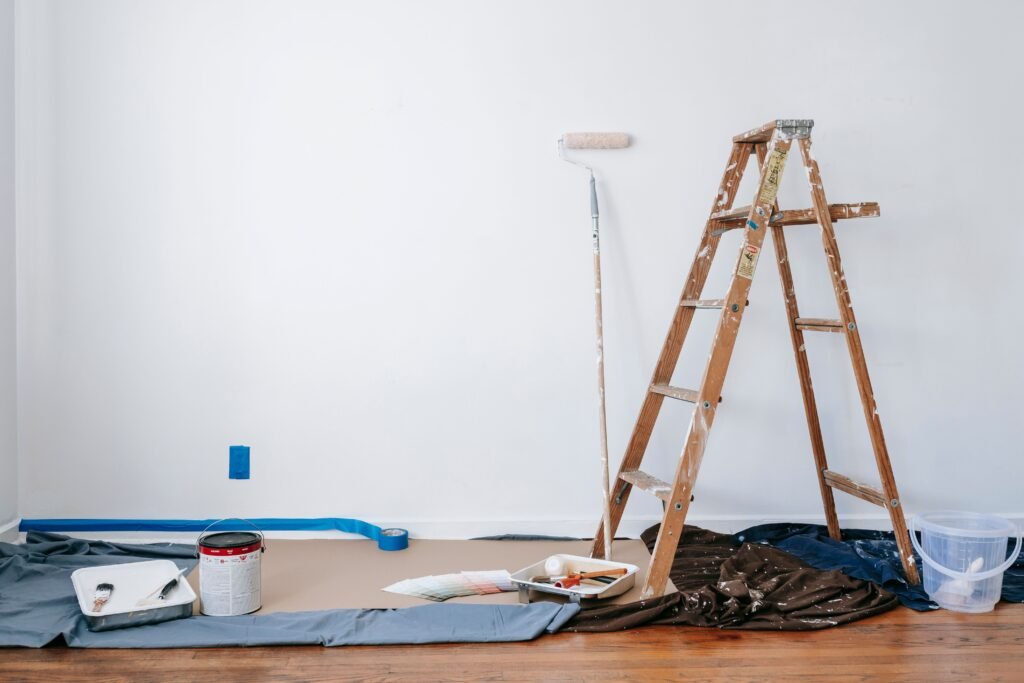
Matching your property’s current condition with the appropriate service scope is essential to achieve good results and avoid paying for unnecessary add-ons.
| Operational Scope | Ideal Property Condition | Key Technical Tasks | Tooling Deployed |
| Standard Housekeeping | Furnished; ongoing daily or weekly surface maintenance | Manual sweeping, damp mopping accessible surfaces, dusting | Microfiber cloths, manual mops, basic domestic tools |
| Occupied Deep Clean | Lived-in furnished home needing deep restoration | Scrubbing tile grout, wiping appliances, descaling chrome | Single-disc rotary scrubber, wet/dry vac, steam cleaner |
| Vacant Move-In / Move-Out | Unfurnished; between tenant leases or post-purchase | Full cabinet interior/exterior washdowns, deep disinfection | Wet/dry vacuum extractors, rotary scrubbers, steamers |
| Post-Construction Clean | Newly completed civil builds or architectural fit-outs | Multi-stage extraction of fine cement and gypsum dust | Commercial multi-stage HEPA vacuums, non-scratch blades |
Regular Housekeeping vs. Deep Cleaning
Standard housekeeping maintains surface tidiness across visible areas. It centers on sweeping dust with soft brooms, damp mopping with neutral cleaners, wiping open table surfaces, and emptying kitchen trash bins. It leaves heavy calcium buildup on tiles, grease inside exhaust fans, and soil in floor grout untouched.
In contrast, residential deep cleaning services provide restorative, intensive maintenance. Technicians clean ceiling fans, vacuum false-ceiling lighting coves, detail electrical switchboards, scrub window tracks, degrease kitchen backsplashes, and use rotary machines to lift dirt trapped deep within floor tile pores.
if you’re preparing a rental property for its next occupant, our move-in and move-out cleaning guide explains the key tasks to consider before handover.
Vacant Move-In/Move-Out vs. Occupied Restorations
The main operational difference between occupied and vacant cleaning lies in mechanical access:
- Occupied Deep Clean: Crews must work around personal belongings, dense living room furniture, and beds. Floor scrubbers and extractors must be maneuvered carefully around delicate finishes, and cabinet interiors are left untouched unless emptied beforehand.
- Vacant Move-In Clean: The empty floor plan allows technicians full access to use rotary machines and wet vacuums efficiently across all rooms. Technicians can thoroughly scrub, vacuum, and sanitize empty wardrobe interiors, utility lofts, under-counter drawers, and pantries to prepare the home for immediate occupancy.
Rough Clearance (Debris removal) ──> Detailed HEPA Extraction (Fine dust) ──> Surface Buffing & Sanitization
Post-Construction and Pre-Handover Decontamination
Typical of newly completed residences along the Dwarka Expressway, Greater Noida West, and New Gurugram sectors, newly constructed properties are heavily coated with fine airborne gypsum dust, concrete splatters, tile grout haze, and paint drips.
Treating this environment like a standard residential clean will ruin domestic equipment. Post-construction decontamination follows a structured three-stage methodology:
- Rough Cleaning: Technicians clear away discarded construction rubbish, packaging materials, and large plaster scrapings.
- Detailed Extraction: Crews deploy commercial wet-and-dry vacuums with multi-stage HEPA filtration to extract micro-silicates from window tracks, electrical conduits, and masonry crevices. Workers then use non-scratch safety blades and specialized solvents to lift paint and grout haze from glass panels and tiles without scratching delicate surfaces.
- Surface Buffing and Sanitization: Technicians run single-disc floor scrubbers with neutral detergents across sub-floors to lift embedded construction dust, finishing with a sanitizing wipe-down of all kitchen and bathroom surfaces.
The Groundwater Dilemma: Navigating Limescale and Chemical Hazards
A unique challenge of maintaining homes in Delhi NCR—particularly deep-borewell zones in Gurugram (Sectors 56–115), Noida (Expressway belts), and trans-Yamuna sectors—is high mineral hardness. Total Dissolved Solids (TDS) levels frequently reach between 800 and 1,500 ppm, leaving water heavily saturated with calcium and magnesium carbonates.
Dissolved Calcium & Magnesium in Groundwater
↓
Rapid Accumulation on Chrome Fittings, Vitrified Tiles, and Glass
↓
TWO CLEANING PATHS:
| Metric / Attribute | Untrained Domestic Approach | Professional Engineered Approach |
| Chemistry Used | Raw, unbuffered hydrochloric acid | Calibrated organic acids (e.g., Taski R9) |
| Action Speed & Control | Fast, aggressive mineral dissolution | Controlled, targeted mineral breakdown |
| Chrome & Fixtures Impact | Damaged electroplating; pitted, blackened plumbing fixtures | Chrome and brassware finishes preserved |
| Tile Grout Integrity | Dissolved and weakened tile grout lines | Structural tile grout stays intact |
| Stone Substrate Safety | Etched and permanently dulled natural marble | Natural stone (marble/granite) protected |
| Overall Result | Permanent material degradation | Safe, residue-free restoration |
When hard water evaporates, it leaves behind persistent, chalky white limescale on glass shower enclosures, bathroom wall tiles, and chrome plumbing fixtures.
Untrained domestic helpers and low-cost operators often use unbuffered hydrochloric acid to remove these deposits quickly. While raw acid breaks down calcium fast, it creates permanent, costly property damage:
- It chemically burns the protective electroplated finish off bathroom mixers, turning chrome fixtures black and corroded within minutes.
- It breaks down cementitious grout lines between wall and floor tiles, allowing wastewater to seep behind tiles and cause structural seepage.
- It permanently etches polished natural stones like Italian Botticino, Morwad marble, and Kota stone, creating rough, dull white patches that require expensive mechanical diamond repolishing to fix.
Professional cleaning companies address limescale safely by applying calibrated organic acid formulas, such as Taski R9. The solution is left on surfaces for several minutes to break mineral bonds gently, agitated with non-scratch nylon pads, and rinsed thoroughly with clean water. This controlled process removes scale deposits while preserving the integrity of expensive plumbing and tile installations.
[Internal Link Opportunity: How to Safely Clean and Maintain Natural Marble Flooring]
Pre-Cleaning Preparation and Post-Service Handover Protocol
Maximizing the value of your cleaning service requires structured preparation before the crew arrives and a thorough inspection before they depart.
Step 1: Secure Valuables & Paperwork
↓
Step 2: Pre-Clear Internal Storage Spaces (If booked for deep cleaning)
↓
Step 3: Verify Active Power & Water Supplies
↓
Step 4: Conduct Technical Supervisor Walkthrough & Surface Briefing
↓
Step 5: Perform Structured Multi-Point Handover Inspection
Preparing Your Home for the Cleaning Crew
Proper preparation helps the cleaning crew focus on deep sanitation rather than spending billable hours moving basic household clutter:
- Secure Personal Valuables: Place all jewelry, passports, financial paperwork, cash, and small portable electronics inside locked safes or cupboards before the team arrives.
- Empty Cabinets and Wardrobes: If you booked internal storage cleaning, remove all clothes, cookware, pantry boxes, and dishes so technicians can vacuum and wipe clean interior shelves without obstruction.
- Confirm Utility Access: Ensure the residence has active electrical connections (including operational 15A/16A high-power points) and running water. Rotary floor machines, steam extractors, and wet vacuums cannot function without continuous electricity and water.
- Brief the Supervisor on Fragile Surfaces: Walk through the home with the on-site supervisor before work begins. Point out vulnerable surfaces, such as unsealed Italian marble, hand-painted accent walls, delicate wood veneers, or loose fixtures that require special handling.
The Technical Handover Walkthrough Checklist
Avoid doing a quick, casual glance before signing off on the job. Conduct a systematic room-by-room walkthrough alongside the on-site supervisor:
[ ] 1. Elevated Overhead Fixtures: Check ceiling fan blades, false-ceiling coves, and door frame tops for settled dust.
[ ] 2. Sliding Window Channels: Check UPVC and aluminum window rails to confirm grit was extracted with vacuum tools.
[ ] 3. Chrome Faucets and Glass Cubicles: Verify hard water scaling was removed without scratching glass or dulling chrome plating.
[ ] 4. Kitchen Degreasing Surfaces: Check the underside of modular cabinets, tile splashbacks, and chimney grilles for oily residue.
[ ] 5. Floor Tile Grout Lines: Ensure dirt slurries were extracted with wet vacuums rather than pushed into grout recesses.
[ ] 6. Appliance and Electrical Check: Test exhaust fans, kitchen range hoods, and nearby electrical switches to ensure components were reassembled safely.
If you spot missed areas or incomplete tasks during the inspection, have the supervisor address them with the team immediately while equipment and chemicals are still on-site.
Frequently Asked Questions (FAQs)
What is the primary difference between deep cleaning and regular housekeeping?
Regular housekeeping focuses on daily or weekly surface maintenance, such as manual sweeping, damp mopping, clearing wastebaskets, and light dusting of open surfaces. Residential deep cleaning services provide comprehensive, mechanized restoration across every part of a room. This includes using rotary floor machines to scrub tile pores, vacuuming fine dust from sliding window channels and false ceilings, removing grease from kitchen exhaust fans and splashbacks, and applying specialized organic descalers to dissolve bathroom limescale without damaging plumbing fixtures.
How long does a comprehensive deep clean take for a 3 BHK apartment?
For a standard, occupied 3 BHK apartment (approximately 1,200 to 1,600 square feet), a professional deep clean typically takes 5 to 7 hours with a crew of 3 to 4 trained technicians. If the property is completely vacant, the job moves faster (roughly 4 to 5 hours) because equipment can move freely across open spaces. Conversely, post-renovation or post-construction cleans often require a full day (6 to 10 hours) due to the extensive manual work required to scrape paint, remove plaster, and extract fine gypsum dust from all surfaces.
Is professional house cleaning safe for pets and young children?
Yes, provided the cleaning company uses calibrated, non-hazardous products such as the Diversey Taski suite. These balanced formulas are safe for surfaces and air quality when diluted properly. However, during the cleaning process, keep children and pets out of active work zones. Floor scrubbers and high-suction vacuums generate loud noise, and wet floors create slipping hazards. Once surfaces are dry and the space has aired out, the home is completely safe for your family.
Do I need to provide cleaning supplies and machinery to the team?
No. Reputable professional cleaning companies arrive with a complete set of commercial tools and supplies. Their kit typically includes industrial single-disc floor scrubbers, commercial wet/dry vacuum extractors, micro-split microfiber cloths, non-scratch scrubbing pads, safety step-ladders, and specialized cleaning chemicals. The homeowner only needs to provide reliable access to running tap water and active electrical wall outlets (including 15A/16A high-power points to run industrial equipment).
Can deep cleaning completely remove old hard water stains from glass and tiles?
Most mineral scaling can be removed safely using organic acid descalers like Taski R9 paired with non-scratch manual scrubbing pads. However, if hard water deposits have sat on glass shower cubicles or porous tiles for years, the minerals can eventually cause chemical etching into the silica substrate itself. When this happens, the mineral film is dissolved, but slight underlying cloudiness or surface pitting may remain permanently within the glass or tile matrix.
Why does post-construction cleaning cost more than standard deep cleaning?
Post-construction cleaning requires industrial-grade decontamination rather than standard domestic sanitation. Newly renovated spaces are covered in abrasive gypsum and cement silicates, tile grout haze, silicone sealants, and paint overspray. Removing this buildup requires commercial HEPA-filtered vacuum extractors to capture fine dust without exhausting it back into the room, non-scratch manual blades to lift paint splatters from glass and joinery, and specialized solvents to strip grout film without scratching delicate new finishes. This extra labor and equipment increases both project duration and pricing.
What should I do if the cleaning crew accidentally breaks or damages an item?
First, point out the damage to the on-site supervisor immediately so it can be documented while the team is still present. Take clear, well-lit photos of the damaged item along with the broader surrounding area. If you booked through a digital marketplace like Urban Company, file a formal property damage claim through their mobile app within the permitted claim window (typically 24 to 72 hours), attaching your photographic evidence and original purchase receipts. If you hired a managed cleaning company, ask their management team for a written incident report and initiate a claim through their commercial liability process.
Is it customary to tip the house cleaning crew in India?
Tipping is not mandatory, but it is a widely accepted way to show appreciation for hard physical work. If a cleaning crew spends 5 to 7 hours thoroughly cleaning and restoring your home, offering a tip of ₹100 to ₹300 per worker (or ₹500 to ₹1,000 pooled for the entire crew) along with cold drinking water or tea is a customary and appreciated gesture.
Making the Right Choice for Your Home
Investing in hiring house cleaning services helps protect your property finishes, improve indoor air quality, and save you valuable personal time. However, achieving great results requires moving beyond low-price shopping and asking prospective providers the right operational questions.
Before booking, verify that your service provider deploys trained, background-verified technicians, uses safe, calibrated chemicals like the Diversey Taski series instead of damaging raw acids, brings commercial-grade floor scrubbers and HEPA vacuums, and stands behind their work with clear property damage and re-cleaning policies.
Using this structured evaluation framework ensures your home receives the deep, professional sanitation it deserves—leaving your living spaces refreshed, hygienic, and well-maintained for your family.
Need help with your facility cleaning requirements? Contact our team to discuss your property and service needs.